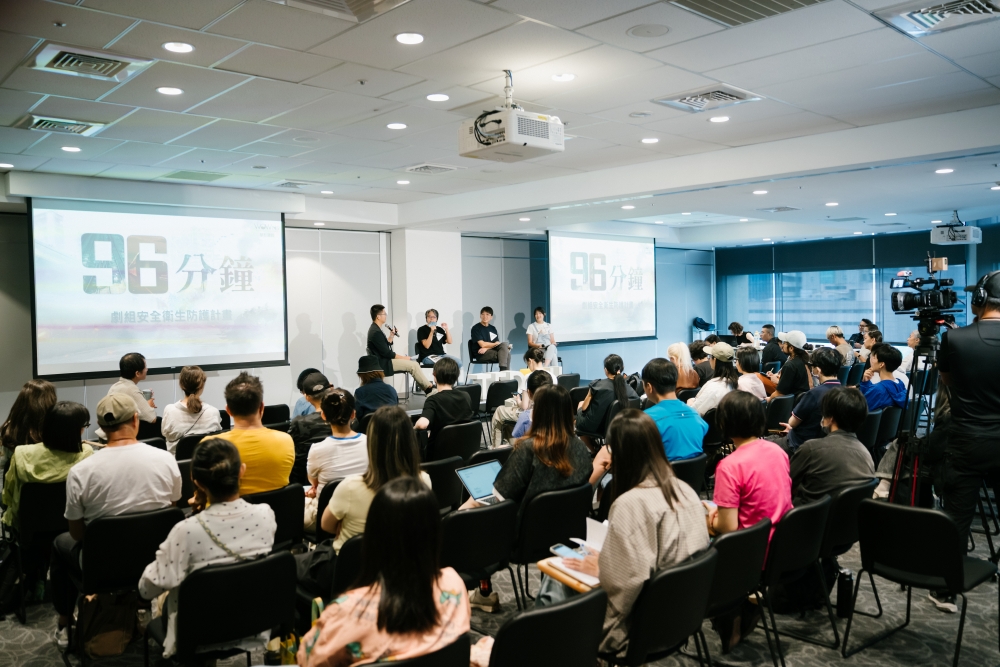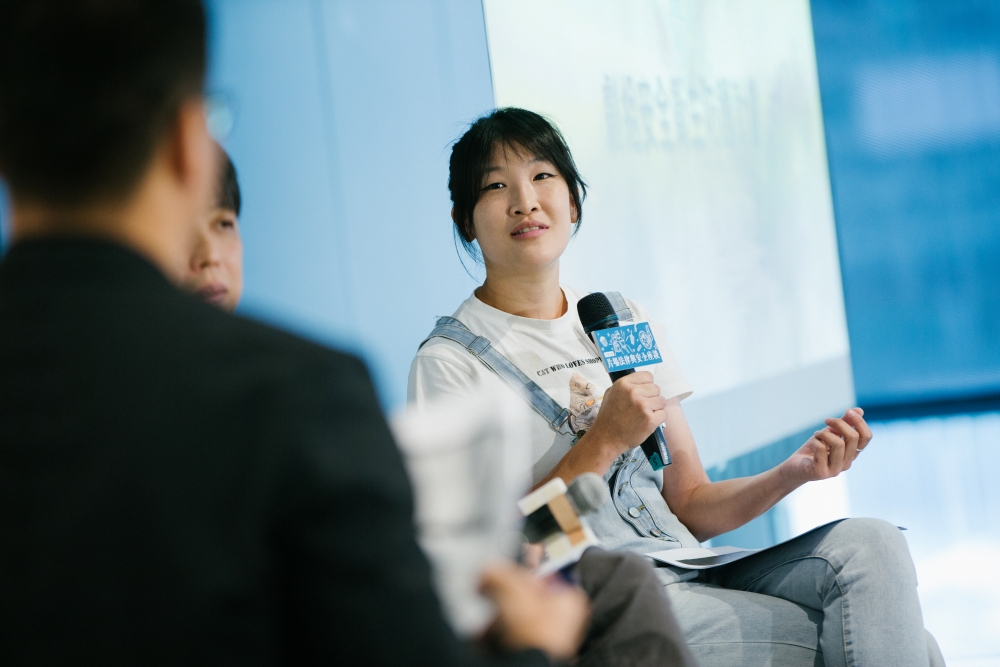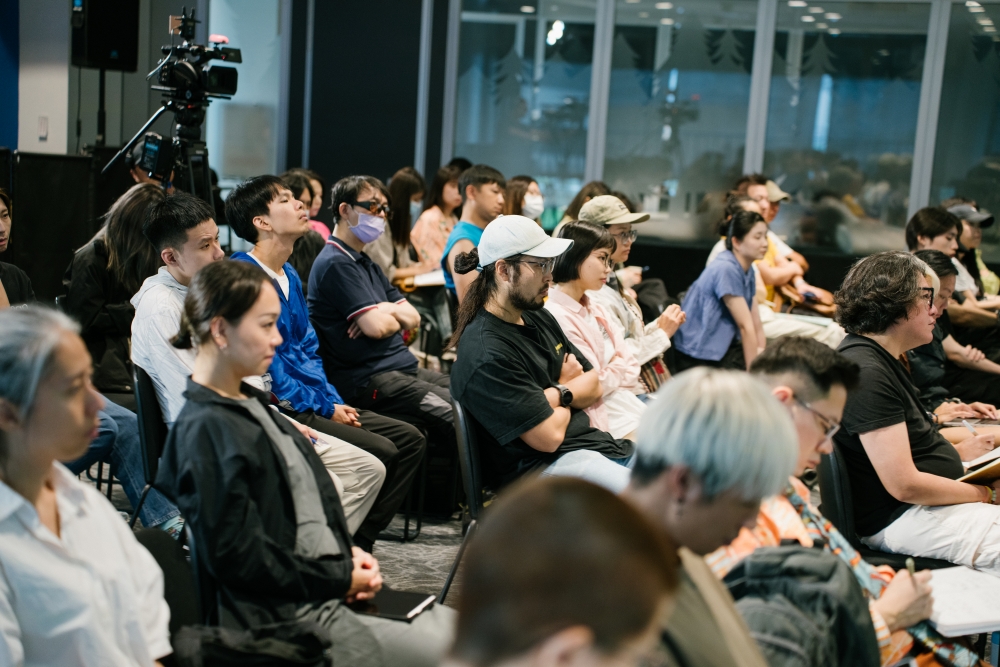


9/10下午【片場法律與安全座談|安全實務】打造災難場景的安心保壘:安全防護與周全規劃
《96分鐘》:當高鐵成為災難片舞台的幕後心法 |
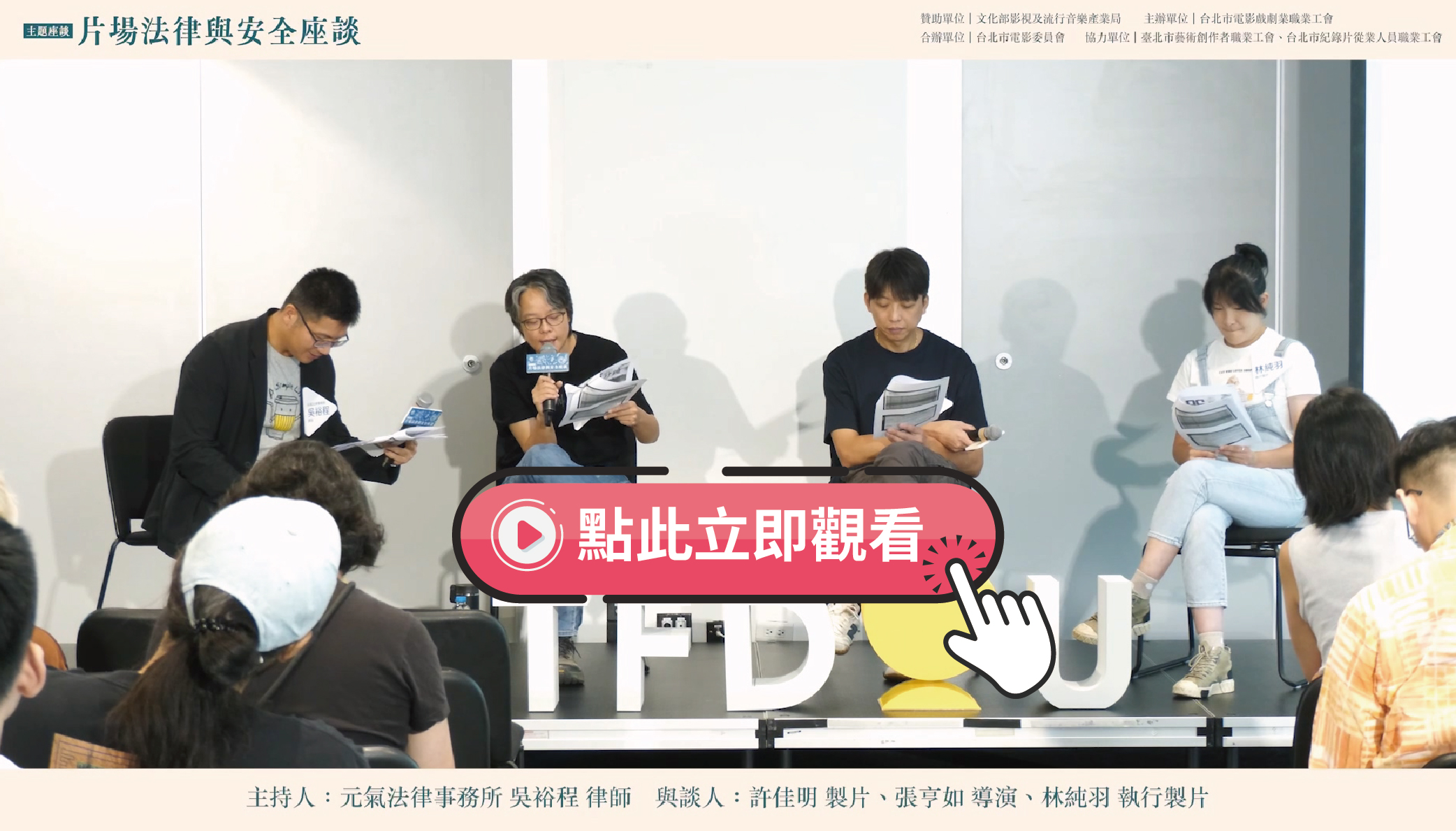
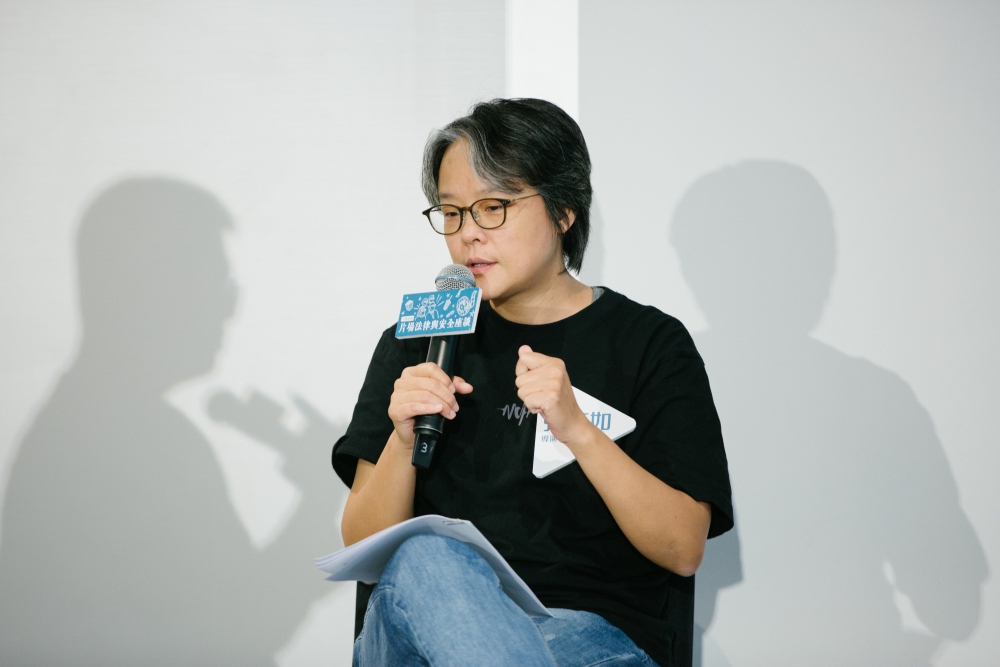
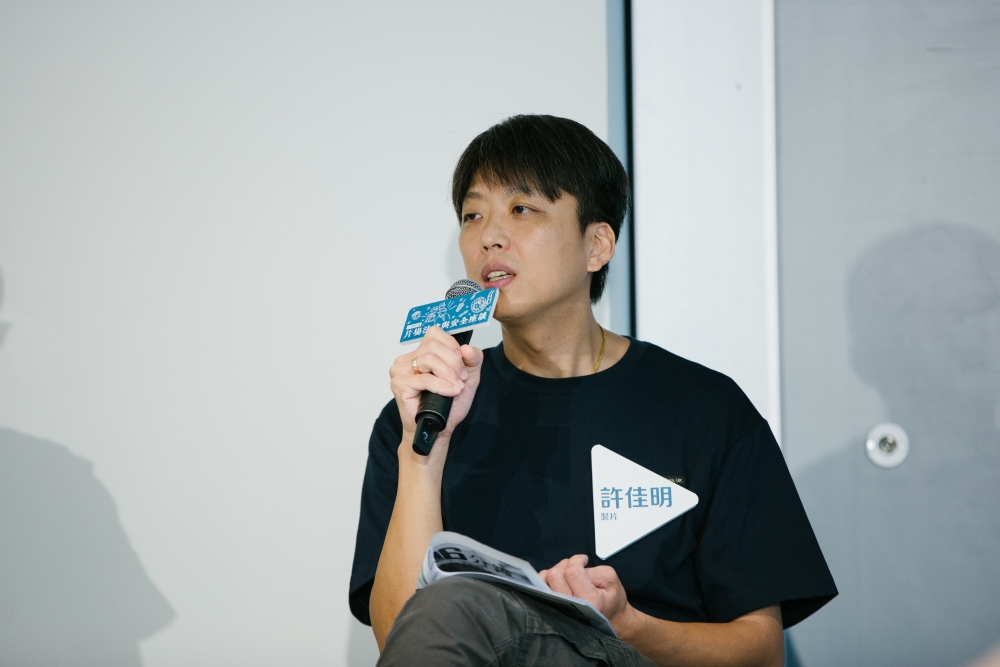
《96分鐘》製作團隊 製片許佳明、副導張亨如導演、執行製片林純羽
國片《96分鐘》製作團隊,帶來一場前所未有的挑戰——將台灣高鐵搬上大銀幕,作為災難片的核心舞台。從半年籌備、策略性停拍,到運用虛擬技術與搭景的創新實驗,團隊以創意和韌性,完成這段關於風險、溝通與合作的旅程。
半年的籌備:策略性停拍,換來更完整的計畫
副導張亨如坦言,這次的前期籌備比以往提早了三到四個月,長達半年之久。執行製片林純羽也提早四個月進組,專注於複雜的安全規劃。然而就在拍攝將啟動時,因預算落差與搭景工期的困難,劇組決定「策略性延後」。這段停拍期,反而成為全片的轉捩點——導演洪子烜、攝影師與特效指導在此階段完成全片分鏡,開創台灣電影少見的前置模式。
高鐵車廂:以有限資源打造無限可能
如何在預算與棚內空間有限的情況下,重現龐大的高鐵車廂?
製片許佳明解釋,團隊最後僅搭建一節主要車廂,加上車長室與茶水間。車廂經過寬度與深度調整,牆面、窗戶與屋頂皆可拆卸,方便拍攝不同鏡位。同時,美術組與技術團隊利用 Unreal 引擎與 Previs 建立1:1虛擬模型,並將動作演員的動態捕捉數據放入3D空間,提前模擬鏡頭與場景需求。這讓通告更精準、排程更有效率,即便現場仍需微調,也能迅速因應。
動線與敘事:從單一車廂到多重場景
《96分鐘》要呈現兩輛高鐵、十二節車廂之間的複雜調度。張亨如先從高鐵官網下載車廂平面圖,模擬角色動線,修正劇本邏輯。拍攝時,美術組則透過更換車次牌、廣告與座位配置,營造不同列車與車廂的差異。團隊甚至製作附有平面圖的通告單,讓演員和技術組在進棚前便能清楚掌握空間與動線。這份細緻的前期規劃,使現場能在高壓環境下仍保持流暢。
演員與表演:在擁擠中尋找真實
演員的排練與安全同樣重要。劇組不僅大量試鏡,還邀請表演指導協助排練。場地甚至依照車廂比例繪製線條,讓演員適應空間感並練習推擠場面。例如巫建和的踩踏戲,團隊安排專業動作演員實際踩踏,並讓他穿戴護具反覆排練;林柏宏的跳車戲,則透過兩次拍攝與特效合成,克服無法搭建雙車廂的困境。嬰兒演出更是精準調度,只在必要時進場拍攝,中遠景則以假娃娃替代。這些安排都讓危險降到最低,也保持了戲劇的真實感。
封街信義區:百家店面的協調戰
電影中重要的信義區外景,背後是一次前所未有的協調挑戰。團隊必須與百餘家店家溝通,有人支持,也有人堅決拒絕。許佳明笑說:「既然要拍,就要拍出台北最繁華的樣子。」因此先與威秀影城達成協議,甚至藉此召開協調會,逐步爭取支持。最終,拍攝分三晚進行,選在商家影響最小的週一、週二深夜。無法配合的店家,則透過公車遮擋或後期處理解決。林純羽補充,現場同時要管控人潮、交通與緊急疏散路線,挑戰之大,遠超乎外界想像。
安全至上:從保險到現場配置
面對高風險場景,林純羽特別考取職業安全衛生業務主管證照。她強調,所有演員與臨演都必須簽訂保險條款,並投保專門的影視險,而非旅遊平安險。大型場面一定配置 EMT 緊急救護人員與救護車待命,信義區拍攝更設立臨時救護站。像片中小女孩跳車戲,團隊在攝影棚搭景並鋪設軟墊,配合拖板車與後期特效完成。雨景拍攝則設計防水系統與即時排水,將風險降到最低。
高壓現場裡的情緒管理
拍攝現場總是緊繃,製作團隊坦言,如何處理情緒幾乎與技術同等重要。林純羽提醒:「讓情緒走在前面,無法解決任何事。」因此她選擇釐清問題並尋求支持,而非將責任全攬在身上。許佳明則以作品為核心,不斷反思困難與解決方法;張亨如則相信,情緒的源頭必定能找到,唯有萬全準備,才能降低衝突。
「排解困難,而不是排擠困難。」這是他們在高壓環境下仍能完成任務的信念。
在壓力中,完成想像
《96分鐘》的幕後故事,是一次勇敢的實驗,也是一次精準的冒險。從技術到情緒,從安全到合作,團隊相信:唯有充分準備、彼此理解,才能在有限條件下,完成看似不可能的挑戰。
-
-
96 Minutes: Behind the Scenes of Turning the High-Speed Rail into a Disaster Film Stage |
Production Team of 96 Minutes — Producer Joe HSU, 1st Assistant Director Henri CHANG, Line Producer Sherri LIN
The production team behind the Taiwanese film 96 Minutes took on an unprecedented challenge—bringing Taiwan high-speed rail to the big screen as the central setting of a disaster film. From six months of preparation and strategic filming pauses, to innovative experiments combining virtual production and physical set construction, the team demonstrated creativity and resilience in completing a journey defined by risk management, communication, and collaboration.
Six Months of Preparation — A Strategic Pause That Led to a Stronger Plan
1st Assistant Director CHANG admitted that this project’s pre-production phase started three to four months earlier than usual, extending to a full six months. Line Producer LIN also joined the team four months in advance, focusing on complex safety planning. Just as filming was about to begin, the team decided on a strategic delay due to budget gaps and challenges in set construction. Ironically, this pause became a turning point for the entire production — during this period, the Director, along with the cinematographer and VFX supervisor, completed the film’s full storyboard, pioneering a rarely seen level of previsualization in Taiwanese cinema.
High-Speed Rail Carriage — Creating Unlimited Possibilities with Limited Resources
How can a massive high-speed rail carriage be recreated under tight budget and space constraints?
Producer HSU explained that the team ultimately built only one main carriage, along with the conductor’s cabin and galley. The carriage was modified in both width and depth, with removable walls, windows, and ceiling panels to accommodate multiple camera angles.Meanwhile, the art and technical departments used Unreal Engine and Previs to construct a full 1:1 virtual model, integrating motion-capture data from stunt performers into the 3D environment to pre-visualize camera setups and scene requirements. This approach allowed for more precise scheduling and efficient planning—so that even when on-set adjustments were necessary, the team could respond quickly and seamlessly.
Movement and Storytelling: From a Single Carriage to Multiple Settings
96 Minutes features complex coordination between two high-speed trains and twelve carriages. 1st Assistant Director CHANG began by downloading carriage floor plans from the official Taiwan High-Speed Rail website to simulate character movements and refine the script’s spatial logic. During filming, the art department created distinctions between different trains and carriages by changing signage, advertisements, and seat layouts.
The team even included detailed floor plans in the call sheets, allowing actors and crew to fully understand spatial relationships and movement flow before entering the set. This meticulous pre-production planning enabled the team to maintain smooth operations on set, even under intense pressure.
Actors and Performance — Finding Authenticity Amid Chaos
For the cast, rehearsal and safety were equally critical. The production team conducted extensive auditions and brought in an acting coach to guide rehearsals. The studio floor was marked to scale according to the train carriage layout, helping actors adapt to spatial constraints and rehearse crowd movement sequences.
For example, in Chien-Ho WU’s trampling scene, professional stunt performers were arranged to perform the steps, while WU wore protective gear and rehearsed repeatedly to ensure safety. In Po-Hung LIN’s train-jumping sequence, the team overcame the challenge of not being able to build two carriages by filming the action in two parts and compositing them with visual effects. For scenes involving a baby, timing and logistics were carefully managed—the infant was only brought on set when absolutely necessary, with a dummy used for wider shots.
These thoughtful arrangements minimized risk while preserving a sense of realism and emotional intensity in the performances.
Filming Shutdown in Xinyi District — A Coordination Battle Across a Hundred Stores
One of the film’s key exterior sequences, set in Taipei’s bustling Xinyi District, became an unprecedented exercise in large-scale coordination. The team had to communicate with over a hundred businesses—some were supportive, others firmly opposed. Producer HSU recalled with a smile, “If we’re going to shoot, we might as well capture Taipei at its most vibrant.”
The team first secured an agreement with Vie Show Cinemas, using it as a starting point to host coordination meetings and gradually win wider support. Filming ultimately took place over three nights, scheduled on late Monday and Tuesday nights to minimize the impact on local businesses. For shops that couldn’t cooperate, the team creatively solved the issue by using buses to block storefronts or handling them later in post-production.
Line Producer LIN added that the crew also had to manage crowd control, traffic flow, and emergency evacuation routes on site—an enormous logistical challenge far beyond what most would imagine.
Safety First- From Insurance to On-Set Planning
Facing high-risk scenes, Producer LIN obtained certification as an Occupational Safety and Health Supervisor. She emphasized that all actors and extras were required to sign insurance clauses and be covered by specialized film production insurance—not standard travel insurance. Large-scale scenes were equipped with EMT personnel and ambulances on standby, while a temporary first-aid station was established during the Xinyi District shoot.
For example, in the scene where a young girl jumps off the train, the team recreated the environment inside a studio, laying safety mats and using a dolly setup combined with VFX to complete the shot. For rain sequences, the crew designed a waterproof system and real-time drainage setup to minimize risks.
Managing Emotions in a High-Pressure Environment
Film sets are often charged with tension, and the production team admitted that handling emotions is almost as crucial as technical precision. LIN noted, “Letting emotions lead never solves anything.” She chooses to clarify problems and seek support instead of carrying every burden alone. Producer HSU focuses on the creative core of the film, constantly reflecting on challenges and solutions, while 1st Assistant Director CHANG believes that emotional sources can always be traced — with thorough preparation, conflicts can be minimized.
“Resolve difficulties, don’t reject them.” That mindset, they said, is what enabled them to complete their work under immense pressure.
Realizing Imagination Under Pressure
The making of 96 Minutes was both a bold experiment and a precise act of risk-taking. From technique to teamwork, from safety to emotional balance, the team believes that only through thorough preparation and mutual understanding can one achieve the impossible — even under the most limited of conditions.
📌資訊
名稱:片場法律與安全座談
日期:2025年9月9日(二)~9月10日(三)
地點:臺北文創F廳(台北市信義區菸廠路88號6樓)
主辦:台北市電影戲劇業職業工會
🕒 時間表
📅 9/9(二)多功能 F 廳
10:00–12:00
解析影視與常見契約類型
主持人:元氣法律事務所 吳裕程 律師
與談人:威律法律事務所 周逸濱 律師
13:00–16:00
IP 改作契約擬定與規劃製片契約擬定與規劃:「影視投資」、「跨國合製」、「宣傳傳發行與國際銷售」
主持人:吳裕程 律師
與談人:張煒珍(電影製片)
📅 9/10(三)多功能 F 廳
10:00–12:00
片場安全實戰,現在開始
主持人:吳裕程 律師
與談人:陳克勤(攝影師)、陳啓政(職業安全衛生業務主管)
13:00–16:00
打造災變場景的安心保壘:安全防護與周全規劃
主持人:吳裕程 律師
與談人:許佳明(電影《96分鐘》製片、張亨如(《噬罪者》《模仿犯》導演、林纯羽《哈勇家》《只要我長大》執行製片