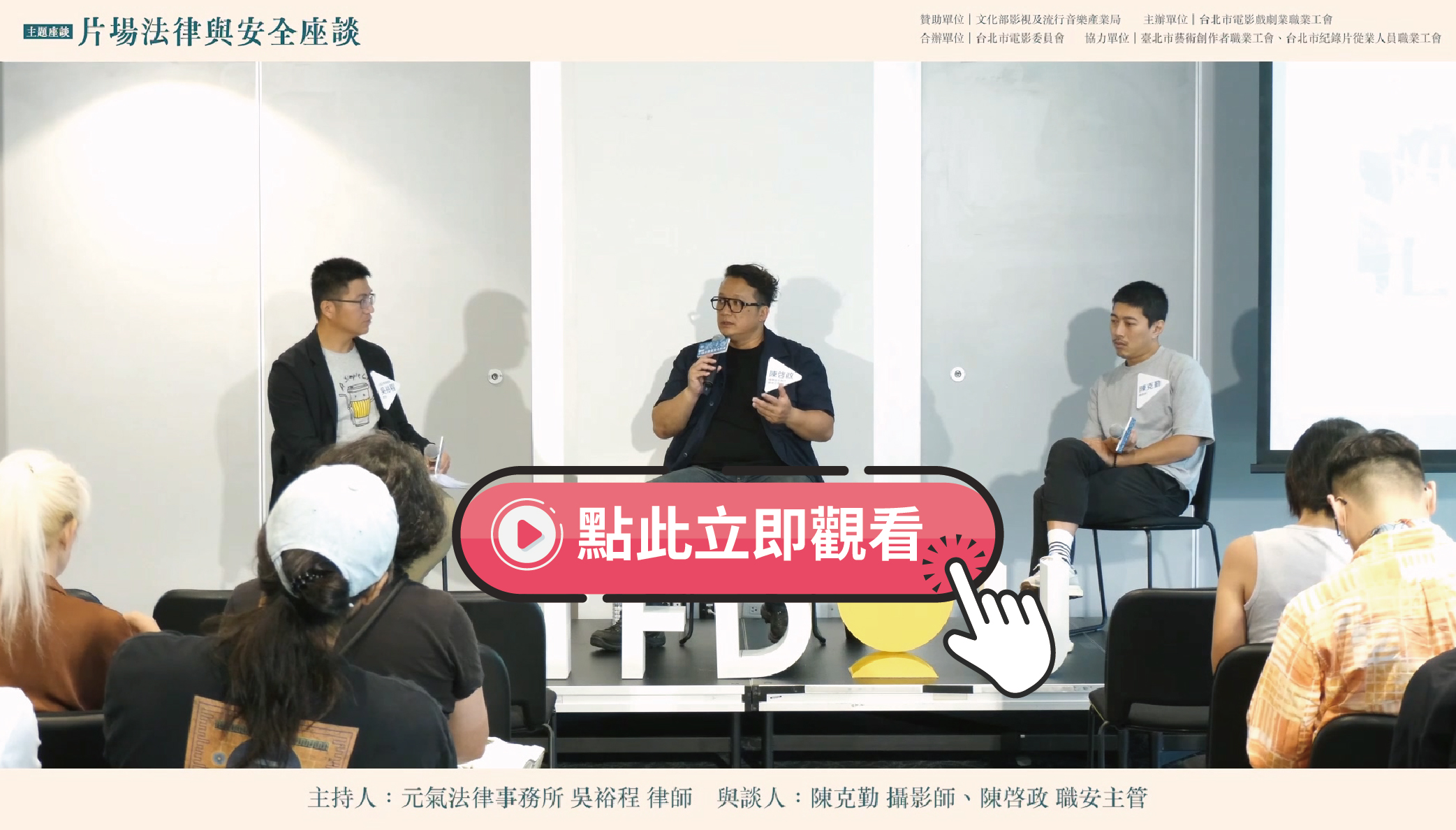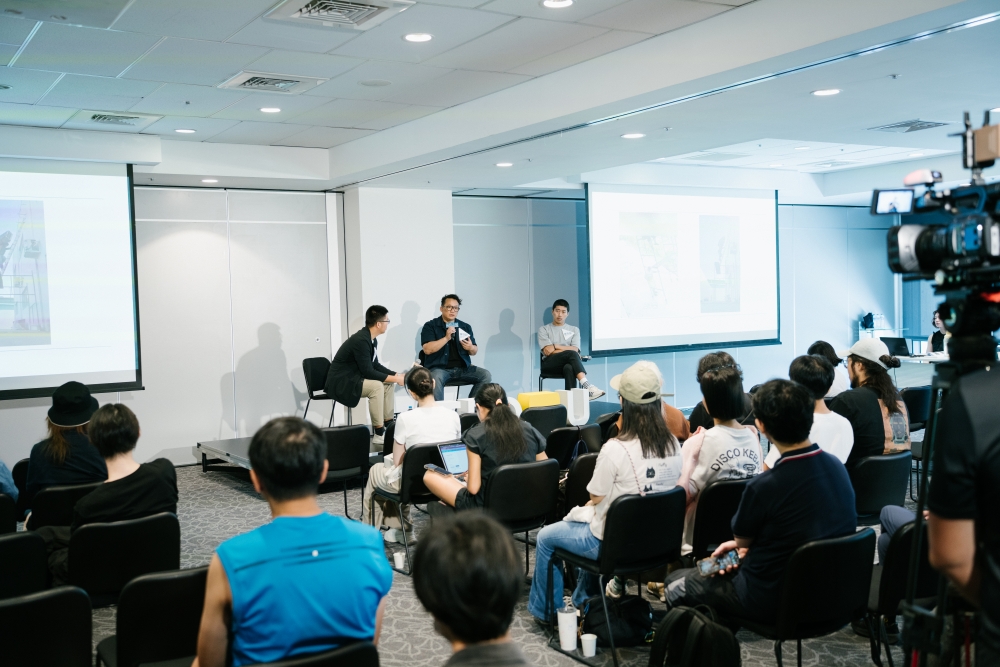


9/10上午【片場法律與安全座談|安全實務】片場安全實戰,現在開始
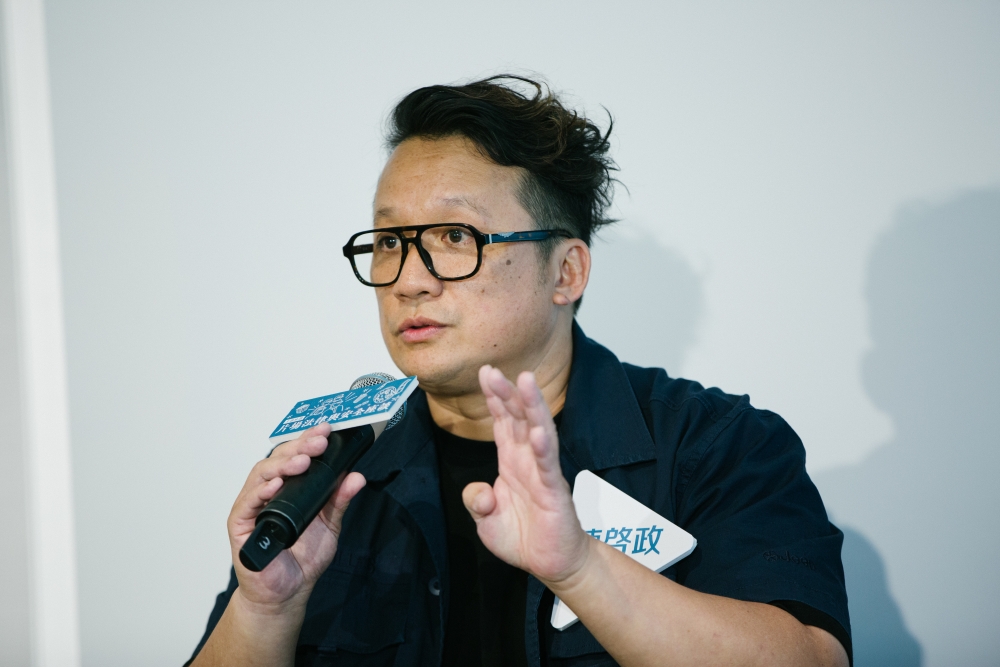
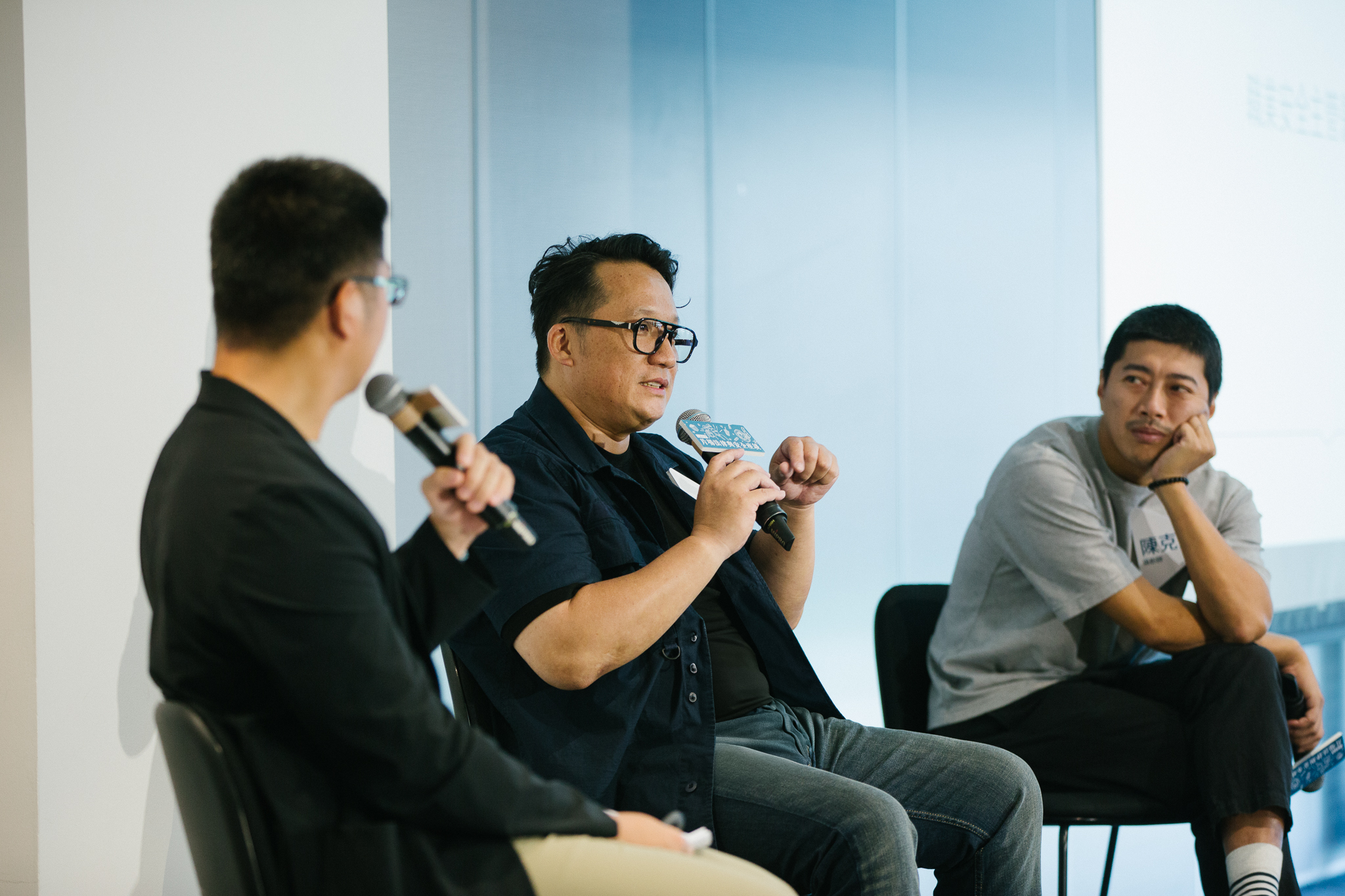
當攝影機開始運轉,安全也必須同行 | 陳啓政 × 陳克勤 對談影視現場的風險與守護
在影像創作的世界裡,我們總是專注於光影、敘事與情感,但有兩位攝影師卻提醒大家:在創作背後,還有一個被忽略卻至關重要的課題——安全。攝影師兼職業安全衛生業務主管陳啓政,與金馬攝影師陳克勤,以專業與親身經驗,揭開影視拍攝現場裡隱而不顯的風險。
法規之外,真實現場的高風險
陳啓政指出,現行《職業安全衛生法》將影視產業歸類為低風險產業,但實際拍攝現場卻遍布高風險作業:
·高處作業:高台、A字梯的錯誤使用,安全帶與錨點設置不足。
·感電危害:電線規劃不當、電流測試疏忽,甚至誤剪電線引發爆炸。
·車輛拍攝:交通管制與分區不足,車速與安全屏障往往被忽略。
·水域拍攝:救生衣、人員配置與專業潛水員不足。
·火效與爆破:缺乏專業證照與完整報告,讓危險在暗處滋生。
·局限空間與大型設備:通風、救援規劃與安全距離常常被犧牲。
「法規將我們視為低風險,但現場每天都在和危險擦身。」這是陳啓政最深的感觸。
角色的轉換:從攝影師到安全主管
為什麼一位攝影師願意跨足安全領域?陳啓政分享,自己曾因過勞在騎車途中發生意外,雖被認定為職災,但卻沒有任何人真正理解拍攝現場潛藏的危機。多年來的種種意外,也讓政府部門開始重視影視安全。作為職業安全衛生業務主管,他的工作涵蓋:
·前期計畫與推動:編寫「安全規劃書」,量化風險、清楚責任。
·現場安全管理:在高風險場景留下書面與影像紀錄。
·跨組協作:與導演、攝影師等核心人員共同決策。
他說,完整的書面紀錄不僅能避免資訊落差,更是保護製片方與工作人員的重要依據。
文化差異:安全意識的落差
陳克勤則從文化角度切入。他觀察到,台灣劇組常人力過剩,分工模糊,甚至堵塞緊急通道,反而帶來危險。相較之下,歐洲劇組則分工精確,並要求完成工作後人員必須到待機區,不得隨意逗留。英國更有全國統一的安全SOP,讓每位工作人員都能無縫接軌。
「有經驗,不代表可以忽視安全。」陳啓政提醒。就像調查顯示,多數計程車事故肇事司機都有十年以上駕駛經驗,正因為熟練,才會鬆懈。這句話也戳中了許多資深影像工作者的心。
高處到水下:細數常見風險
談到最常遇到的高風險場景,兩位攝影師以生動案例讓人心驚:
· 高處作業:兩米以上必須佩戴全身式安全帶,A字梯不能被濫用。
·感電意外:吹風機隨意插電、錯誤剪線的悲劇不只發生一次。
·車拍:必須落實路權申請、交通指揮與人數管控。
·水下作業:需要完整潛水團隊,絕非臨時支援可替代。
·火效與爆破:專業報告與替代方案(如後期特效)是降低風險的關鍵。
·局限空間:氣體偵測、救援吊掛系統缺一不可。
·大型器械:吊臂、搖臂的安全範圍必須再多設緩衝距離。
這些看似細節,卻是生命與意外的分界線。
個人責任:勇敢說「不」
最終,兩位攝影師都回到同一個核心:安全意識與個人責任。
陳克勤直言,危險時刻,說「不」是每個人的權利與義務;再大的導演,也不能要求工作者以生命換取畫面。他強調,相信專業人員的判斷,並保持溝通,是拍攝現場最基本的安全保障。
陳啓政則補充,即使安全措施再完善,也無法完全杜絕意外,但這並不是什麼都不做的理由。防護存在的意義,是在最壞的情況下,把傷害降到最低。
生命無價,安全在自己手中
對談最後,陳啓政分享了一則震撼案例:某石油公司為了避免高昂救援成本,竟選擇放棄一名被吸入海底管道的潛水員。這殘酷的選擇提醒所有人,在龐大利益面前,個人生命可能被視為可犧牲的成本。
他語重心長地說:「安全,最終還是掌握在自己手裡。法律能追究責任,但挽不回失去的生命。」
-
When the Camera Starts Rolling, Safety Must Roll with It | A Conversation Between Cinematographers CHEN Chi-Cheng and CHEN Ke-Chin on risk and protection in Film Production
In the world of visual storytelling, we often focus on light, narrative, and emotion. Yet, two cinematographers remind us of an equally vital but often overlooked aspect of filmmaking — safety. Cinematographer and certified Occupational Safety and Health Supervisor CHEN Chi-Cheng, together with Golden Horse-winning cinematographer CHEN Ke-Chin, draw from their professional expertise and first-hand experience to reveal the hidden risks that lie behind the beauty of film production.
Beyond Regulations: The Reality of High-Risk Film Sets
CHEN Chi-Cheng pointed out that under Taiwan’s current Occupational Safety and Health Act, the film and television industry is classified as a low-risk sector. However, the reality on set tells a different story — filmmaking environments are filled with high-risk operations:
·Work at Heights: Misuse of platforms and A-frame ladders, with insufficient safety harnesses and anchor points.
·Electrical Hazards: Poor cable planning, neglected current testing, and even accidental wire cutting that can lead to explosions.
·Vehicle Scenes: Inadequate traffic control and zoning, with vehicle speed and safety barriers often overlooked.
·Water Scenes: Lack of life jackets, insufficient safety personnel, and absence of certified divers.
·Fire and Explosion Effects: Use of pyrotechnics without proper certification or documentation, allowing hidden dangers to develop.
·Confined Spaces and Heavy Equipment: Poor ventilation, lack of rescue planning, and compromised safety distances.
“The law classifies us as a low-risk industry, but on set, we brush shoulders with danger every single day.” This, CHEN Chi-Cheng said, is the feeling that stays with him the most.
Shifting Roles: From Cinematographer to Safety Supervisor
Why would a cinematographer step into the field of safety management? CHEN Chi-Cheng shared that after suffering a motorcycle accident caused by overwork—which was later recognized as an occupational injury—he realized that few people truly understood the hidden dangers of film production. Over the years, repeated on-set incidents have gradually prompted government agencies to pay closer attention to safety in the film industry.
As a certified Occupational Safety and Health Supervisor, his work now includes:
·Pre-Production Planning and Implementation: Drafting comprehensive safety plans that quantify risks and clarify responsibilities.
·On-Set Safety Management: Documenting high-risk scenes through written and visual records.
·Cross-Department Collaboration: Making joint safety decisions with directors, cinematographers, and other key crew members.
He emphasized that thorough documentation not only prevents communication gaps but also serves as essential protection for both producers and crew members.
Cultural Differences: The Gap in Safety Awareness
CHEN Ke-Chin approached the issue from a cultural perspective. He observed that film crews in Taiwan often suffer from overstaffing and unclear division of labor — sometimes even blocking emergency exits, ironically creating new risks. In contrast, European crews operate with precise role separation and require that once a crew member completes their task, they must return to a designated standby area and are not allowed to linger on set. The U.K. even has a unified national safety SOP, enabling every crew member to integrate seamlessly into any production.
“Experience doesn’t mean you can ignore safety,” CHEN Chi-Cheng said. Just like research shows that many taxi accidents involve drivers with over ten years of experience — familiarity can breed complacency. His words resonated deeply with many seasoned film professionals.
From Heights to Underwater: Identifying Common On-Set Risks
When asked about the most frequent high-risk scenarios, the two cinematographers shared vivid examples that underscore the dangers often taken for granted on set:
·Working at Heights: A full-body safety harness is required for any work above two meters; A-frame ladders must never be misused.
·Electrical Hazards: Simple mistakes — such as plugging in hair dryers haphazardly or cutting the wrong cable — have led to real tragedies.
·Car Rig and Road Shoots: Proper road permits, traffic control, and crew number management must be strictly enforced.
·Underwater Filming: A complete and certified diving team is essential; ad-hoc support cannot substitute for professionals.
·Fire and Explosion Effects: Professional safety reports and alternative methods (such as using visual effects in post-production) are key to reducing risk.
·Confined Spaces: Gas detection systems and rescue harness setups are non-negotiable.
·Heavy Equipment: Cranes and jibs must include additional buffer zones beyond standard safety distances.
These may seem like small details, but they often mark the line between life and disaster.
Personal Responsibility: The Courage to Say “No”
In the end, both cinematographers returned to the same core principle — safety awareness and personal responsibility.
CHEN Ke-Chin stated bluntly that in moments of danger, saying “no” is both a right and an obligation. No matter how renowned the director, no one has the authority to demand that crew members risk their lives for a shot. He emphasized that trusting the judgment of safety professionals and maintaining open communication are the most fundamental safeguards on any film set.CHEN Chi-Cheng added that even the most rigorous safety measures can’t completely eliminate accidents — but that’s no excuse for inaction. The purpose of safety precautions, he said, is to minimize harm when the worst happens.
Life Is Priceless: Safety Is in Your Own Hands
To close the conversation, CHEN Chi-Cheng shared a shocking real-world case: a petroleum company once chose to abandon a diver who had been sucked into an underwater pipeline — simply to avoid the high cost of rescue operations. This harrowing decision serves as a stark reminder that in the face of immense financial pressure, a single human life can be reduced to a disposable cost.
He spoke with quiet gravity: “Safety, in the end, lies in your own hands. The law can assign responsibility, but it can never bring back a life once lost.”
📌資訊
名稱:片場法律與安全座談
日期:2025年9月9日(二)~9月10日(三)
地點:臺北文創F廳(台北市信義區菸廠路88號6樓)
主辦:台北市電影戲劇業職業工會
🕒 時間表
📅 9/9(二)多功能 F 廳
10:00–12:00
解析影視與常見契約類型
主持人:元氣法律事務所 吳裕程 律師
與談人:威律法律事務所 周逸濱 律師
13:00–16:00
IP 改作契約擬定與規劃製片契約擬定與規劃:「影視投資」、「跨國合製」、「宣傳傳發行與國際銷售」
主持人:吳裕程 律師
與談人:張煒珍(電影製片)
📅 9/10(三)多功能 F 廳
10:00–12:00
片場安全實戰,現在開始
主持人:吳裕程 律師
與談人:陳克勤(攝影師)、陳啓政(職業安全衛生業務主管)
13:00–16:00
打造災變場景的安心保壘:安全防護與周全規劃
主持人:吳裕程 律師
與談人:許佳明(電影《96分鐘》製片、張亨如(《噬罪者》《模仿犯》導演、林纯羽《哈勇家》《只要我長大》執行製片